Each of the below links goes to a Google map for that day's proposed route. Each pin in the map is a navigational waypoint. It is not a stop.
Day 1 Map - Montauk to Shinnecock Inlet 40.1 Miles
Day 2 Map - Shinnecock Inlet to Smith Point Park 25.5 Miles
Day 3 Map - Smith Point Park to Captree / Jones Beach 31.21 Miles
Day 4 Map - Captree / Jones Beach to Rockaway Inlet 30.03 Miles
Day 5 Map - Roackaway Inlet to Sands Point 35.21 Miles
Day 6 Map - Sands Point to Port Jefferson 36.27 Miles
Day 7 Map - Port Jefferson to Mattituck 28.01 Miles
Day 8 Map - Mattituck to Orient 22.29 Miles
Day 9 Map - Orient to Lake Montauk 16.40 Miles
Day 10 Map - Lake Montauk to Montauk Point 4.14 Miles
Sunday, August 12, 2012

Tide and Current Predictions for Long Island Paddle
A lot of people have asked about the legendary currents that I will be encountering along the trip. Click here to see the tide and current table that I have been working on.
http://tidesandcurrentslongislandpaddle.blogspot.com/
Wednesday, August 8, 2012
Control Your Future by Controlling Your NOW!
Dorland’s Medical Dictionary
defines obesity as “an increase in body weight beyond the limitation of
skeletal and physical requirements as the result of excessive accumulation of
body fat[i].”
The truth is, obese or not, nothing about an “accumulation of body fat” makes
life easier and stealing the ease from our life qualifies excess body fat as a
dis-ease. This disease is particularly nasty because not only does put your
health at risk; it is particularly difficult to treat.
While I
don’t believe that fear is the best motivator, the process of becoming aware
can be scary. Becoming aware of how serious a threat this is, and of its
complexity, and of how it could attack you will help you discover its weak
points. As a good general, athlete, or chess player would tell you, the only
way to gain victory over a difficult opponent is to attack their weak spots.
Two
thousand-five hundred years ago, Chinese general Sun Tzu said, “If you know the
enemy and know yourself, your victory will not stand in doubt”[ii]
In the post that follows, I will help you to help you first know your enemy and
then I will help you to know yourself.
According
to the U.S. Centers for Disease Control (CDC), obesity is second only to
smoking as a leading cause of preventable death in the United States. [iii]The
key word in that sentence is “preventable,” for you absolutely can change your
future by changing your present. By examining and ultimately changing any one
of your current thoughts about how the way you eat and move, your life will get
better. No matter what your scale says, even a small
amount of weight loss could improve your life and maybe even make it longer. Research
shows that small weight losses of less than 10 percent of a person’s body
weight can improve all the heath complications that go along with being chubby.
 One of the
most common and dangerous of these complications is type 2 diabetes. So common,
in fact, is the link between the two diseases that the organization Shape Up
America! coined the term Diabesity® as part of an initiative to
raise awareness of the growing prevalence of obesity and diabetes being joined at the hip. The key
message of their campaign is that for most overweight people, type 2 diabetes
can be controlled, cured, and prevented through weight loss and physical activity.
One of the
most common and dangerous of these complications is type 2 diabetes. So common,
in fact, is the link between the two diseases that the organization Shape Up
America! coined the term Diabesity® as part of an initiative to
raise awareness of the growing prevalence of obesity and diabetes being joined at the hip. The key
message of their campaign is that for most overweight people, type 2 diabetes
can be controlled, cured, and prevented through weight loss and physical activity.
One study
showed that a mere 2.2-pound weight loss in a person who is diabetic could add
three to four months to his life! A 22-pound weight loss reduced the risk of
premature death from diabetes by an amazing 35 percent.[iv]
Maybe the
old adage: “Life is short, so eat dessert first” needs to be amended to read:
“Life is shorter when you eat too much dessert”
The Tarnishing of the Golden Years
While
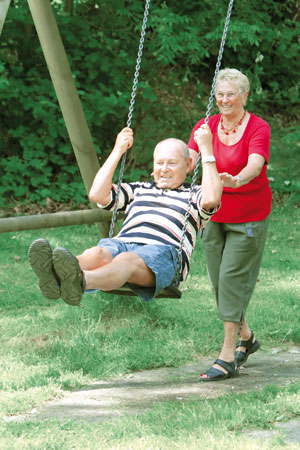
living to a ripe old age is good, aging gracefully is much better. Life is not
a contest to see who can live the longest. What good is it to live eighty or a
hundred years if the last thirty are miserable? Think of the time and effort
you put in now as investments in your wellness retirement portfolio. Just as small amounts
of money saved over a lifetime allow you the financial security to enjoy old
age, small changes in the way you think about your health and weight will
compound and grow, allowing you truly to enjoy the fruits of your life’s
labors. It might seem impossible, but that the Twinkie you are about to wolf
down could seriously influence your ability to hop on a plane when you are 80.
If you are holding a Twinkie right now, think about how much more fun it would
be to spend your eightieth birthday lying on a beach Costa Rica instead lying
in a bed at a nursing home. One simple change is to know when you are and are not really hungry. If you are no longer hungry, don’t keep eating. Food
that you don’t really need is actually worth more to your future when it is in
the trash. Even if you are in the middle of chewing food that you know is not
right for you, it’s not too late. It is not actually a crime to throw out food
and you can even spit it out.
According
to You: On a Diet, by Michael F.
Roizen, M.D., and Mehmet C. Oz, M.D. (Free Press, 2006), diabetes causes your
body to age one and a half years for every year that actually passes.[v] Therefore, if you are diagnosed with diabetes
when you are 40, by the time you are 45, your body will actually be 48. That
means by the time you retire at 65, your body will already be ready for that
nursing home. Add that to the likelihood that you will be blind and missing a
limb or two by that time and you can begin to understand why my diagnosis of
diabetes was such a strong motivator for me to lose weight and why I am now doing this paddle for the diabetes association.
At only 34
years old, I had the medical history of a 60-year-old. All it took for me to
become a man who can now go running with my 18-year-old son was the awareness
that I could become better. Thanks to a single spark of awareness, I can now
even borrow his pants if I need to.
As you gain weight, your risk for
health problems grows by leaps and bounds. Those extra pounds have been linked
to, and, in many cases, are directly responsible for, a whole host of nasty
problems. Diseases like osteoarthritis, hypertension, acid reflux, urinary
incontinence, gallbladder disease, depression, diabetes, hyper-insulinemia,
asthma, sleep apnea, congestive heart failure, anemia, coronary-artery disease,
menstrual irregularity, infertility, cancer, psychological dysfunction, sexual
dysfunction, and social discrimination have been attributed to an excess
accumulation of body fat. The good news is that changing how you think about
your weight and health can eliminate them.
Being a parent, the quality of my
children’s lives is even more important than my own. When I learned that
because of the combined affect of obesity and diabetes scientists are
predicting that our children will have a shorter life expectancy than we do[vi], it made me a little sick. You need to be
aware also that the lifestyle you lead creates an atmosphere that permeates the
lives of those around you. Like secondhand smoke, they can’t help but to
breathe in some of your lifestyle. Research shows that obesity runs in
families. I remember once my doctor asked me if obesity ran in my family. I
said, “Doc, nobody runs in my family.” It would have been funny if it weren’t
true.

While I was heavy, both my kids were
chubby and sluggish. Now, both my son and daughter are thin, fit, and healthy
and they have no concept of what it is like to be “on a diet.” They have absorbed
my beliefs about staying active and eating well. Knowing that even my smallest
lifestyle changes have improved the future lives of my kids certainly helps me
keep going. Protecting the ones you love from having to go through the
struggles you now face would be a wonderful gift.
Did you know that your losing weight
could even improve the life of your pets? I remember one time that I
recommended a client, Patrick, start a walking program. He told me, “I just
don’t like to walk.” I mentioned it a few more times, but this belief made him
very resistant to go out and take even a short walk. After weeks of
disappointing weight loss, he had a breakthrough and lost weight. As we talked,
he told me that he started walking his dog. “I don’t know,” he said. “It’s just
not the same as going for a walk alone. I love my dog and this gives me time to
spend time with him. I think of it as training time for him. He loves it and
when I get home from work he can’t wait to get going.”
Simply by changing one thought about
taking a walk, Pat not only got moving more, but because he went for his walk
the moment he got home from work, he avoided heading to the kitchen for his
traditional after work snack. As a result, he not only started to move more, he
broke one of his problem food habits, which caused him to eat less and he lost
weight. Transforming one thought about
walking (that it was “training for his dog” rather than for himself) set off a
cascade of other positive changes in Pat’s life, including the change of having
a happier and healthier pet.
[ii]
Tzu, Sun (2009). The Art of War. London, UK: Ailax Merchandise (UK) .
[iii]
Flegal K, Graubard B, Williamson D, Gail M. Excess Deaths Associated with
Underweight, Overweight, and Obesity. JAMA 2005;
293:1861-1867 (Confirmed by phone: CDC, Media Relations, Karen Hunter (404)
639-3286
[iv]
Lean MEJ, Powrie JK, Anderson AS, et al. Obesity, weight loss and prognosis in
type 2 diabetes. Diabetic Med. 1990; 7:228-233
[v]
Oz, Mehmet, and Michael Roizen. You: On a Diet: The Owner's Manual for Waist
Management. New York: Free Press, 2006.
[vi]
Olshansky SJ, Passaro DJ, Hershow RC, Layden J, Carnes BA, Brody J, Hayflick L,
Butler RN, Allison DB, and Ludwig DS, “A Potential Decline in Life Expectancy
in the United States in the 21st Century,” New England Journal of Medicine,
352:11, pp. 1138-1145
Wednesday, August 1, 2012
Regular exercise in natural environments improves both physical and mental health.
There is no doubt about it. Kayaking, hiking, mountain biking, rock climbing, etc. makes me feel better. I look forward to the opportunity to get out into nature and move my body because it makes me feel great both physically and mentally. While the physical benefits of exercise are well studied and undisputed, the mental benefits of exercise are now being realized. As it happens, where you exercise may be as important as how much you exercise. Increasingly science is showing that exerciseing in nature is far better than going to the gym. Certainly, the more I study the human machine, the more I realize that we are meant to close to nature. We are not simply sitting on this planet, we are part of it. It seems the further people drift from the real world into the virtual world, the less happy and fulfilled they become.


 |
| Sunrise at Can 19. Extra Credit For the one who can tell me the Latitude and Longitude |
Now a new study out of Scotland is supporting the belief that being in nature does a body (and mind) good. According to the recently published study by the University of Glasgow (http://dx.doi.org/10.1016/j.socscimed.2012.04.012), regular exercise in a natural environment may cut the risk of suffering from poor mental health by half.
Researchers at the University of Glasgow studied exercisers in both a natural and non-natural environments. They found regular use of natural environments such as forests and parks seemed to enhance mental well being, while going to a gym. . . not so much. This study joins a growing body of evidence that exercise in natural environments has a positive effect on biomarkers and self-reports of stress, on mood and reported levels of fatigue.
Lead researcher, Professor Richard Mitchell of the Centre for Research on Environment, Society and Health, said: “I wasn’t surprised by the findings that exercise in natural environments is good for your mental health, but I was surprised by just how much better it is for your mental health to exercise in a green place like a forest, than in other places like the gym.”
 |
| See, I do more than just kayak. I mountain climb too! |
“Woodlands and parks seemed to have the greatest effect, so the message to doctors, planners and policy makers is that these places need protecting and promoting.”
“The results suggest that making the decision to exercise in a natural environment just once a week could be enough to gain a benefit. Any additional use may have a bigger effect.”

As for me, one way I get the most out of my morning commune with nature is to meditate. As I paddle, I work hard to be totally present. I focus on my breathing and my experience in the moment. I don't let my thoughts wander and I DON'T think about my to-do list.
The study revealed that local roads were the environment most commonly used regularly for physical activity, followed by home/garden. One of the limitations of the study is that it did not record the type, duration or intensity of activity conducted in each environment but other studies have shown that simply walking outside has a profound effect on mental and physical health. If walking is not your thing, meet me at the beach before sunrise and I will be glad to introduce you to my workout buddies. The seagulls, ducks, herons, cormorants and an occasional harbor seal. Be Well! - Doc Russ

Tuesday, July 17, 2012
When the wrong thing is the right thing

 I managed to get an early start and when I reached Ponquogue bridge, I was treated to a magnificent sunrise. There are actually two Ponquoque bridges, the new one and the old one. The picture is of the new bridge. Most of the old bridge was demolished in the 1980s. What is left is a fishing pier to the North and a SCUBA diving preserve to the South.
 If you are a SCUBA diver and you want to dive this preserve, be careful or you will get swept away from the bridge and be taken for quite a ride. The current running through this area at a non slack tide is deadly extreme. You should enter the 1 hour and 21 minutes after high tide for Shinnecock inlet as published in Newsday. Do not stay in the water any more than about 35 minutes. If you feel the tide start to turn, immediately take a southerly heading and stay under water because the current is stronger on the surface. You shouldn't panic because if you keep heading south you will eventually reach the eddy caused by the structure of the bridge and be able to easily swim back to the bridge itself. I have been diving here before and it is a great dive!!
 As for my paddle, at first the water was calm, then the wind picked up and of course, it was dead against me. After about five hours of continual paddling, my right shoulder started to hurt. Usually, I would just ignore a minor annoyance such as this but this pain seemed different. It felt like it was coming from my rotator cuff. As you might imagine, this freaked me out a bit. I honestly have no time for a shoulder tear right now. As I paddled, I explored different stroke technique. None of them seemed to help. Then, finally, I decided to paddle with my hands. I strapped the paddle to the kayak, leaned forward and did sort-of an Australian crawl. It helped! I was able to keep my shoulders low and thus engaging different muscles. I would have just stopped paddling and rested but every time I stopped paddling, the wind would push me back. I had to keep moving or lose ground. I paddled like this for about a mile. Then I tried using my paddle again but instead of a "proper" stroke, I used mainly my arms. This also helped to rest my shoulder. Slowly, I raised my stroke and was able to paddle normally without shoulder pain. When I got finished over 6.5 hours later, I was exhausted. I burned over 3400 Calories! That is like burning a whole pound of fat in ONE exercise session! My main lesson from this experience is the importance of being body aware. When I paddle, or SCUBA or rock climb, etc. I constantly do mental body scans and try to interpret what I am feeling. This helps me to safely push through minor annoying pain, modify my activity so that I can continue or just find a way to stop and rest.
 Saturday, July 7, 2012
What is YOUR most important thing?
This morning I kayaked for 4.5 hours straight. I managed to cover over 19 miles and burn 2808 Calories. Why did I do it? I did it to train for the around Long Island Paddle (duh). It is my plan to do the whole 260 miles in 10 days or less so I need to do at least 26 miles (or more) a day. 19 miles in a day is my upper limit right now. That is roughly the distance from Montauk to Block Island, a route that I have taken many times before as part of Paddle for Humanity ( www.p4h.org )
I kinda like the idea of pushing this particular region of my comfort zone. Today's paddle was hard. The wind and the current were against me much of the time. One thing I observed was when I focused on the miles (I wanted to do 20) I would get discouraged because all these external forces were working against me. When I felt discouraged, my performance suffered.
Then I realized that if I shifted my focus, I could change everything about the experience. It turns out, when your tired and sore, your attitude can be a source of reserve power.
What if I focused on the incredible value of the training? After all, the training is more important than today's mileage, right? I once had a mentor that said success comes from knowing the most important thing.
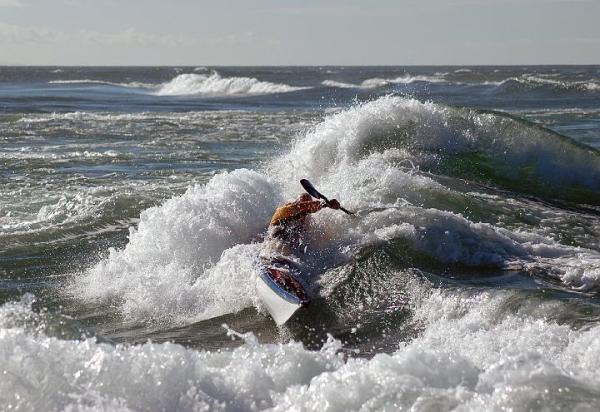 |
| This is not a picture of me. Although I have been in similar waters. |
As I focused on all these forces that were beyond my control, I was limiting what I would actually accomplish today. The most important thing was the training! The mileage was secondary. Besides, the wind, the current, the sun and a ton of boats tossing 3 foot wakes my way will all be here when I do the actual paddle. I needed to train for this. I needed to see the value of the here and now. When I shifted my focus, my attitude changed and it was actually easier to paddle through. This was an AWESOME training day.
To carry this lesson through to life. I wonder how many other areas of my life would benefit from a shift in focus? There are a lot of times when I am "tired and sore" as I navigate the sometimes rough waters of my life. I often need the reserve power of a renewed perspective.
I suppose the best way to get this perspective is to stop and ask, "what is the most important thing here?" "What do I REALLY want to accomplish?"
In my work, I get people to focus on asking themselves the right questions at the right time. The more uncomfortable the question, the better it is for you.
What questions make you uncomfortable?
When I help people lose weight, I continually ask them to evaluate their focus. Is the number on the scale the most important thing? If you answer yes then you might quit if the scale rebels against you. Also, people who focus on the scale tend to gain the weight back after they lose it. Why? Generally, they regain because they lose focus. They figure they have arrived so there is no reason to worry about it anymore.
What I have found is that lasting weight loss comes when people focus on the life they gain. They get jazzed about being healthy, climbing mountains or playing with grand kids. The most important thing for them is life, not weight loss. Living a remarkable life is an constantly renewable source of positive motivation.
Monday, July 2, 2012
Sunrise training in New Jersey
Took an impromptu hop to the Jersey shore last night with my Jeep, my tent and my kayak.

Subscribe to:
Posts (Atom)